Getting from a listing to a signed contract boils down to one thing: a reliable funnel that moves people from “curious” to “contacted” to “committed.” This article will guide you through effective lead generation funnels for realtors, their effectiveness specific strategies to use at each stage, stats that show their success today, and shifts that will transform how you get leads in the next 3–5 years.
Why a funnel matters for real estate
Real estate involves infrequent high-cost purchases. Most agents can’t rely on steady repeat business from the same buyer; they succeed by filling the top of their sales funnel and following up. This means focusing on systems that:
- Create predictable incoming leads (not just occasional referrals).
- Gather lead contact information and qualifying data.
- nurture leads with valuable content.
- Give priority to quick human follow-up when interest is clear.
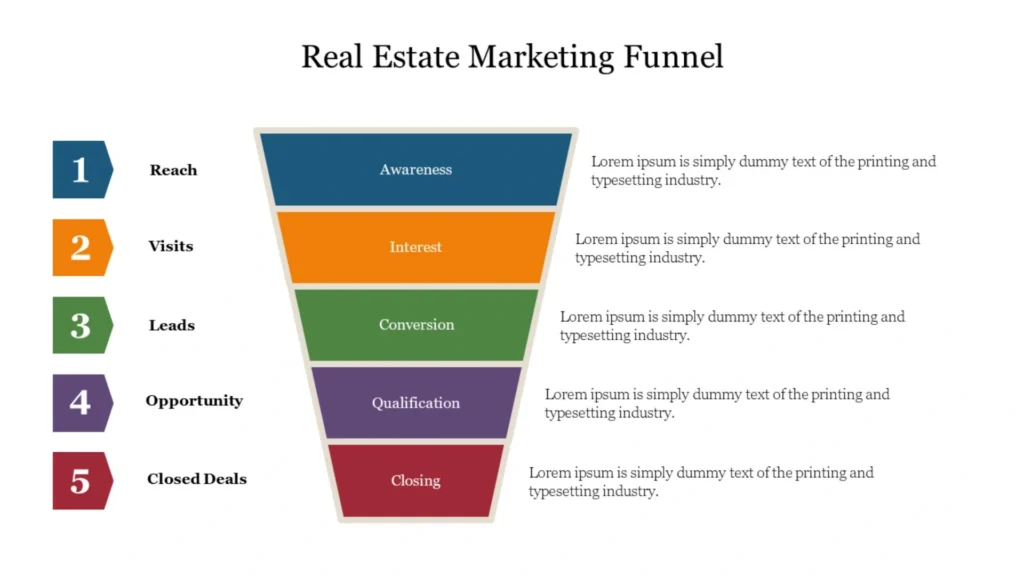
Top 5 Funnel stages that work for real estate
1) Awareness — reach the right people
Goal: draw qualified viewers to listings local neighborhood pages, or community content.
Effective channels:
- Local SEO & Google Business Profile: Top the “homes for sale near me” searches and neighborhood queries.
- Short-form social video (Reels/TikTok/YouTube Shorts): Brief home tours, “what’s great about this area” clips showing agent personality.
- Paid search & social to target specific intent: Ultra-local keywords, audiences likely to move.
- Community content & events: Online seminars for new buyers guides to neighborhoods live streams of open houses.
Why video is key here: Brief property clips and Reels grab attention and boost listing views — a trend that grew a lot in the past two years. Video-first platforms also allow you to target people who watch 50–75% of a property video as high-interest warm audiences.
2) Capture — change viewers into leads
Goal: gather contact details and first-party signs of interest.
Capture methods that work well:
- Single-purpose landing pages for each campaign (e.g., “3-bed home in [neighborhood]: Virtual tour & price history”). Use short forms (name, email, phone preferred timeline).
- Lead magnets: Reports about neighborhoods, tools to calculate “what your house is worth”, checklists you can download for moving, PDFs showing market trends.
- Widgets for instant booking to schedule property tours and valuation calls.
- Chat widgets & buttons to call with a click: Contact options that put mobile first boost capture rates.
Benchmarks: Rates for landing page/lead capture differ based on channel and creative, but across industries median conversion rates for landing pages often fall in the single digits; pages that target specific local areas often do better than generic pages by 2–3 times.
Leads from paid sources and organic search behave — leads from email and referrals have converted at higher rates, while ads and forms can create more volume but with lower conversion rates.
3) Nurture — qualify, educate, and build trust
Goal: guide captured leads from awareness to readiness without pushing too hard.
Automation funnels that turn leads into customers:
- Quick welcome + value email (send within 5 minutes): Include the promised asset key local market info, and ask to set up a call.
- Email series over 4–8 weeks: Market updates homes sold stories about neighborhoods, short videos of similar houses, and one personal contact (text or call).
- Actions that trigger responses: If a lead looks at a listing again or watches a video, move them to a higher-priority group and send an SMS or make a call.
- High-value personal touches: A custom video message from the agent, a call after downloading an ebook, or inviting someone in the neighborhood in person.
Why being quick matters: leads contacted fast are much more likely to convert. Research shows getting in touch with a lead within minutes boosts the chance of conversion — agents who get back within five minutes see much better results.
4) Convert — move to appointment and closing
Goal: get the lead to tour a property, set up a listing appointment, or sign a contract.
Best ways to do this:
- Use workflows that confirm appointments: Links to calendars, texts to confirm, maps + tips for parking).
- Give pre-visit value: Seller questionnaires, buyer wishlists) to boost appointment efficiency and show expertise.
- Use virtual tours & live walkthroughs: As screening steps before in-person visits.
- Build urgency: Market comparisons, upcoming rate/price shifts, and time-limited offers (e.g. pre-market window for buyers).
Conversion facts: overall lead-to-client conversion in real estate is low; top agents and systems push this number up by improving screening and quick follow-up. Expect a good funnel to yield steady appointments and a higher-quality pipeline rather than a big instant conversion jump.
5) Refer & repeat — turn closed clients into advocates
Aim: Transform happy customers into sources of recommendations and recurring sales.
Strategies:
- Automated follow-up plans: Moving checklist, service provider suggestions yearly check-ups).
- Ask for referrals with background: Seek introductions to neighbors who might want to sell; propose a “seller market review” for houses nearby.
- Genuine referral incentives: Chosen local present contribution to a charity the customer picks, or a helpful service credit.
Recommendations and repeat customers will cut your long-term CAC (customer acquisition cost) and are the most effective source for many agents.
Tested funnel plans
Plan A — Buyer funnel (city market quicker sales process)
- Awareness: Play Reels+shorts to show “behind-the-scenes” tours and use Google Ads for “apartments 2BHK [city]”.
- Capture: Create a landing page with a 1-minute video tour + “book a viewing” form.
- Nurture: Send instant SMS + email with open time slots; Follow up for 3 days with info on neighborhood commute times and schools.
- Convert: Offer video pre-tour; Give virtual walkthrough; Set up in-person showing; Provide help with mortgage pre-approval partners.
- Refer: Send a note on moving day and ask to introduce two neighbors.
Blueprint B — Seller funnel (suburban market, quality over quantity)
- Awareness: Local SEO focused on neighborhoods (market reports for specific areas) + Facebook ads aimed at homeowners 30–65 within a 5-mile radius.
- Capture: Landing page asking “What is your home worth?” with CMA download option.
- Nurture: Follow-up on automated valuation, examples of recent neighborhood sales, and 1 custom video.
- Convert: Free consultation for homeowners + clear plan for pricing and marketing.
- Refer: Check-ins on anniversaries and incentives for referrals linked to donations in the community.
Blueprint C — Luxury listings (high-touch)
- Awareness: Unique video series, partner marketing focused LinkedIn and private newsletter sharing.
- Capture: Private showing sign-ups behind gates; one-on-one pre-screening call.
- Nurture: Custom property files virtual staging side-by-sides private online tours.
- Convert: Select open houses and hands-on negotiation help.
- Refer: Top-notch after-sale care (home upkeep contacts) and special events.
Tools and measurements that help funnels succeed
- CRM: Record all leads and note their source + actions. Use labels for “buyer-seller-lead-intent”.
- Automation: Email + SMS drip feature and behavior-based triggers.
- Landing page builder: Single-focus pages with split testing.
- Calendar + booking: Make scheduling showings easier.
- Analytics: Check cost-per-lead lead-to-appointment lead-to-close, and response-time effects.
- Video tools & virtual tours: Run walkthroughs and password-protected video content.
Key numbers to watch :
- Leads by source (organic, paid, referral, social).
- Lead response time (middle value and % within 5 minutes).
- Appointment rate (leads → appointments).
- Close rate (leads → closed clients).
- Cost to get a new client.
Industry trends reveal that many potential customers don’t turn into actual buyers because companies don’t follow up well. A small portion of gathered leads end up as sales. If businesses respond faster and keep in touch , they’ll see a big jump in results.
What the numbers tell us
- Reports show that internet leads turn into sales at rates between about 0.5% and 3.5%. This changes based on where the leads come from and how they’re handled. Leads from emails and referrals often do better than those from basic online forms.
- Quick contact is key: Reaching out to leads in minutes instead of hours or days boosts their chances of converting. Some reports show that contacting leads within five minutes can make them up to 9 times more likely to convert. This explains why immediate SMS and call processes are so important.
- Virtual tours pack a punch: More and more buyers prefer virtual tours. Studies indicate that virtual tours and 360° images can boost listing views a lot and speed up sales. Listings that include virtual tours often get many more views and sell quicker.
- AI and automation adoption: Real estate companies and tech-savvy teams now use AI tools to value properties, make videos, and score leads. This trend keeps growing. It lets computers do routine work while agents build relationships. A study shows AI use in brokerages is on the rise.
Future trends that will shape lead generation
- Video-first marketplaces & short-form dominance: Social media and listing apps will keep pushing video previews, live tours, and short property clips as the main ways to discover homes.
- Virtual & augmented reality tools: 3D tours and AR features to “place furniture” will become common for pricier listings.
- Hyper-local data and predictive scoring: Predictive analytics will help agents rank leads based on their likelihood to buy or sell within six months.
- Conversational and instant interfaces: Agents will use chat-based tools (SMS, WhatsApp interactive landing pages) to capture leads.
- Privacy-first first-party data strategies: As broad third-party targeting becomes more limited real estate professionals will rely on first-party lead capture methods. These include collecting owner or visitor emails and phone numbers as well as tracking consented behavior.
Checklist to put a tested funnel into action this month
- Build one focused landing page for a popular area or key property.
- Include a quick 1-minute tour (short video) and offer a valuable resource (area report) in exchange for contact info.
- Set up a fast response system (text + email within 5 minutes).
- Create a series of 4–6 messages (mix of videos and local stats) and a trigger for engaged leads.
- Track and share weekly: where leads come from how fast you respond, and how many appointments you book.
Conclusion
Reliable lead generation systems for real estate agents follow clear trackable steps: drawing in the right people grabbing attention with targeted pages and freebies, responding , keeping in touch with useful info and timely messages then sealing the deal through easy scheduling and personal contact.
The data shows that being fast using video, and staying in regular contact make a big difference — and new tools like virtual house tours and smart data analysis will give a clear advantage to agents who start using them.
FAQs
Q1. What’s the cheapest lead source for real estate?
The most affordable way to get leads in terms of cost-per-lead is through organic local search and referrals. But keep in mind that the “cheapest” lead doesn’t always mean the lowest cost-per-closed-deal – you need to look at quality and how well they convert, not just numbers. Putting money into SEO and creating content for your community can result in steady low-cost leads in the long run.
Q2. How many touches does a lead need before they convert?
It changes, but many buyer journeys need multiple touches across channels — email, text, video, and a human call. A typical nurture sequence of 6–12 touches over 2–8 weeks is usual, with more frequent touches for high-intent behavior. The main thing is relevant helpful touches, not spam.
Q3. Should I pay for leads or build organic funnels?
Both. Paid leads provide speed and scale; organic funnels grow over time and reduce CAC. The best approach mixes paid for immediate pipeline and organic content for long-term growth. Monitor CAC per closed deal to use your budget .
Q4. Will AI replace the human agent in lead generation?
No — AI and automation will handle routine tasks (scheduling basic qualification, video editing) and improve predictive targeting, but human relationship skills, negotiation, and trust-building stay crucial. Use automation to save your time for valuable human interactions.
Also Read:
How to Use Facebook Ads to Sell Expensive Properties
Tips to Create Pinterest Boards for Real Estate Staging
How to Build a Personal Brand as a Realtor on LinkedIn
How to Use Schema Markup to Enhance Real Estate Visibility