Getting a constant flow of good potential students is the key to growing any online course business. No matter if you’re selling expensive certification programs or $19 quick lessons, the plan to attract buyers mixes smart positioning, easy-to-try offers, great content, and reliable paid and free channels. This article shows you practical, tested ways to get more students for your online courses. You’ll see current standards, things you can do right now, and clear advice on what will be important next.
Why finding new students matters for online courses
A course’s success isn’t tied to a single launch but to a repeatable funnel: draw visitors → build interest → turn them into paying students → keep and upgrade them. A steady stream of leads eases the strain on each launch, cuts the cost of getting new customers over time, and allows for realistic revenue predictions.
As the worldwide online learning market grows so does the competition, making a dependable lead engine a must-have. Recent market reports indicate the e-learning sector continues to see strong year-on-year growth pointing to both chances and the need for smarter marketing.
Quick benchmarks (what to aim for)
Before picking channels, it’s useful to know typical performance ranges:
- Market growth: The e-learning market worldwide is worth hundreds of billions of dollars and experts predict it will keep growing each year. Different analysts give different numbers, but they all show the market will continue to expand .
- Landing page conversion: Across different industries, the median rate at which landing pages convert visitors stands at about ~6% (benchmarks differ by industry and what’s offered). Pages that promote webinars or free workshops often convert at much higher rates.
- Email engagement: Welcome emails and automated emails get opened the most; for engaged mailing lists across all sectors open rates reach 20% while click-through rates fall between 2–5%. These figures can change based on the specific group of recipients and the industry.
- Paid ads cost-per-lead: The cost per lead (CPL) changes a lot depending on the channel, location, and type of ad; in the education sector, CPLs fall between $10 and $50 or more. Lead-form ads on Facebook tend to have lower CPLs than video or carousel formats.
Use these numbers as rough guides — your actual results will depend on your specific market, product price, and how good your ads and sales process are.
Top strategies to generate leads for online courses
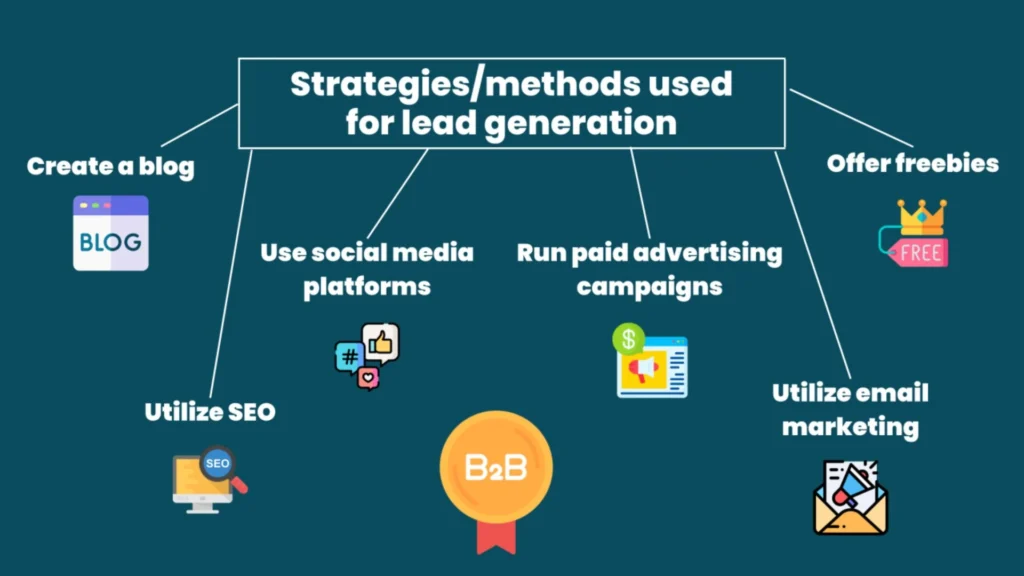
Here are practical tactics organized by stages of the sales funnel: getting noticed, capturing interest, building relationships, and making sales. Try different combinations, the fastest-growing programs use several channels, not just one.
1) Content funnels that draw in and screen potential customers
Develop content that tackles a particular issue your course resolves. Rather than broad “how to master X” posts, focus on problem-specific content that points to your course’s promise.
Strategies:
- In-depth SEO guides that zero in on exact searches (e.g., “how to ace [certification] test in 90 days”) and offer a content bonus (free quick reference or mini-lesson) behind an email sign-up.
- YouTube lessons with a link to a free module, playlist, or webinar registration — videos build trust quicker and help rank for “how-to” and “review” searches.
- Case studies and student success stories that show results; these make your lead magnet more credible.
Why it works: natural content creates growing traffic and draws in visitors with intent — these are the most valuable leads you’ll get in the long run.
2) Lead magnets that convert well and offers with low barriers
Lead magnets should link to the course outcome and give quick concrete value.
Ideas:
- Mini-course or module: Offer 10–20 minutes of top-tier lesson content to get an email.
- Live workshop or webinar: Teacher-led sessions work well; webinar landing pages often beat generic pages.
- Assessment or quiz: Custom results (e.g., “Your 30-day English fluency readiness score”) both qualify leads and create a sense of urgency.
- Templates and checklists: Useful tools that make things easier for potential students.
Helpful tip: Make the lead magnet the first step in the paid journey (module → short program → full course) so the path from free to paid makes sense and is smooth. Webinars and live events often lead to much higher conversion rates than passive PDFs.
3) Paid acquisition — predictable growth when fine-tuned
Paid channels offer immediate growth but need to be fine-tuned to achieve profitable CPLs.
Best practices:
- Use lead-form ads (Facebook/Instagram/LinkedIn) to make signups easier then guide interested people to a webinar or one-on-one talk. Lead-form ads often cut down on hassle and bring down the cost per lead.
- Search ads (Google Ads) work best for courses that match what people are looking for (like “project management certification course”) — they cost more per lead but attract people more likely to buy.
- Retargeting: Show ads to people who’ve visited your site or watched your videos — this often costs less per lead and more people end up buying.
- Keep tabs on CAC and LTV: Monitor the cost to acquire customers (CAC) and their lifetime value (LTV) ; some expensive programs can handle CACs of a few hundred bucks if the LTV looks good.
You can expect high CPLs at the start; enhance your ads, audience targeting, and website experience to bring them down.
4) Webinars and live events — the conversion powerhouse
Live workshops and webinars are the most effective tools to convert leads for high-end courses.
Why they’re so good:
- Live events allow potential customers to see how you teach and your expertise firsthand.
- Webinars create a sense of urgency and planned engagement, and they give you a chance to address concerns right away.
Strategies:
- Use automated webinar sequences for ongoing funnels, and live webinars for new product launches.
- Start conversations with your audience using an in-house chat, polls, and Q&A to make your pitch more relevant.
- Turn attendees into customers by offering time-limited extras.
Studies show that when the topic matches the course on offer, webinar landing pages and sign-ups convert much better than regular opt-ins.
5) Email marketing & nurture sequences
The nurture path you choose after getting an email address decides how many free leads become paying students.
Key points:
- Welcome sequence: Give out the promised lead magnet right away then send messages that add value by showing results, proof from other users, and brief success stories. People often engage most with welcome emails.
- Behavioral flows: Groups based on actions (opened webinar, watched 50% of video, clicked pricing) get custom message series — a warm lead who saw a demo should receive a more direct sales pitch than a new blog reader.
- Drip educational series: Break down a key idea over several emails then show the course as the quickest way to become an expert.
- Re-engagement: If leads go quiet, launch a win-back offer (discount new extra, or another live workshop).
Keep sequences brief, results-driven, and aimed at clear steps (join webinar, schedule a call, buy with installments).
6) Partnerships and affiliate channels
Team up with influencers, communities, or course creators who offer complementary content.
Ways to do this:
- Affiliate programs: Give a cut for course referrals; make joining easy and provide marketing materials and ready-to-use text.
- Joint webinars: Hosting together brings your course to new crowds with built-in trust.
- Content partnerships: Sharing posts and guest lessons in big communities (Slack groups subreddits LinkedIn) can bring in high-quality leads.
Well-planned partnerships are cost-effective and grow by using existing trust.
7) Social proof, reviews, and mini-credentials
Social proof cuts down barriers and boosts conversion rates.
Put in place:
- Video testimonials from students and written success stories with clear results.
- Certification badges students can put on LinkedIn.
- Public cohort metrics (completion rates average salary increase) to boost credibility.
Spread these across landing pages, email sequences, and paid ad creatives.
Measurement framework: things to keep an eye on
Keep track of both top-of-funnel efficiency and bottom-line results.
Key metrics:
- Traffic sources (organic, paid, referral, social).
- Landing page conversion rate (try to test for 2–15% based on the offer).
- Email open and click-through rates (use ~20% open / 2–5% CTR as a rough guide).
- CPL and CPA by channel.
- Webinar attendance and show-up rate.
- Student conversion rate and cohort LTV.
- Churn and completion rate (key to upsell and referral potential).
Solid analytics allow you to focus on the most profitable channels and eliminate the rest.
Pricing, payment options, and ways to cut down on friction
Higher prices require stronger proof and smoother checkout. Tactics that cut down on friction and boost conversions include:
- Payment plans to lessen sticker shock.
- Limited-time pricing to create urgency.
- Money-back guarantees to lower risk.
- Quick onboarding and instant access to the first module to secure students.
Keep in mind: The lead-generation strategies that are effective for a $49 course differ from those for a $1,500 certification. Align your channels and message with your price point.
Future trends that will shape lead generation for online courses
These trends will affect which strategies work best in the next 2–5 years:
- Market growth continues, but investors are cautious — E-learning remains big and growing, but investment patterns have changed; companies that show clear ROI and retention metrics will get more attention.
- Marketing focuses on experience — Brief sample modules, micro-certifications, and group-based trial experiences will work better than standard lead magnets. People buy results and real experience more than PDFs.
- Automation combined with personalization — Marketing automation with customized learning suggestions and changing email content will improve conversion and LTV. (For example: custom email based on quiz result or module watched.)
- Video-first funnels — Brief videos and educational clips will play a key role in attracting attention on social media and preparing leads before a webinar or sales call.
- Greater focus on results & qualifications — Companies and students will give priority to provable results (completion certificates, portfolio examples) when selecting paid courses.
- Group & cohort approaches — Programs that mix teaching with lively group communities (peer feedback real-time Q&A sessions) will lead to more recommendations and repeat sales.
These shifts mean course creators need to view marketing and product experience as a single connected system.
Quick 30-day sprint plan
To gain momentum , follow this 30-day plan:
Week 1: Build a lead magnet linked to your top module; design a high-converting landing page and email welcome series.
Week 2: Launch a small paid ads test (lead form + webinar) targeting 2–3 audience groups; monitor CPL and conversion.
Week 3: Run one live workshop/webinar and engage registrants with focused email sequences.
Week 4: Review results, focus on the best audience and creative, and set up an evergreen webinar funnel.
Keep doing what works, make it better, and grow the profitable parts.
Conclusion
Successful lead generation strategies for online courses blend clear positioning, valuable lead magnets, and a seamless journey from initial contact to paid enrollment. Content and video help build trust, webinars convert leads, email automation nurtures prospects, and paid channels allow scaling.
Keep a close eye on metrics — landing page conversion, email engagement, cost per lead, and lifetime value — and put money into areas that prove profitable. As the market grows, programs that succeed will focus on teaching results and the process of acquiring students.
FAQs
Q1: What’s the single most effective lead generation channel for online courses?
There’s no one-size-fits-all answer — it hinges on cost and market. For cheaper courses organic SEO and social media work best. For pricier offerings, webinars and targeted paid search/social tend to give the best bang for your buck because they attract people more likely to buy. Use industry standards to guide your tests and zero in on channels that bring in leads at a profit.
Q2: How many leads do I need to sell one student?
This depends on how well your funnel converts. Let’s say your landing page converts 6% and your email-to-sale conversion is 2%. In this case, you’d need about 833 visitors to make one sale, with a 0.12% final conversion rate. Don’t guess – figure out your funnel’s actual conversion at each step and focus on improving the weakest part.
Q3: Are free trials or free courses better to capture leads?
Both can work well. Free mini-courses or modules that ask for an email sign-up are good for finding motivated learners. Free full trials can bring in lots of casual users and cost more to support, so use them for high-value offers where how people use the trial shows if they’ll buy.
Q4: How should I price my course to get the most leads?
Set prices based on value and different customer groups. Give options like self-study, group classes, and one-on-one coaching to match what people are willing to pay. To boost sales at each price point, offer payment plans, early sign-up discounts for group classes, and clear messages about what students will achieve.
Also Read:
SEO strategies for educational institutions
Digital marketing for college admissions
Social media marketing for educational institutions