Picking between ecommerce direct to consumer and wholesale can shape a brand’s future. Both options get products to buyers, but need different approaches, expenses, and plans for growth. This article explains the main trade-offs with real numbers, examples from practice, and upcoming trends. This helps you decide which path – or mix of paths – fits your business best.
A simple explanation: what each model means
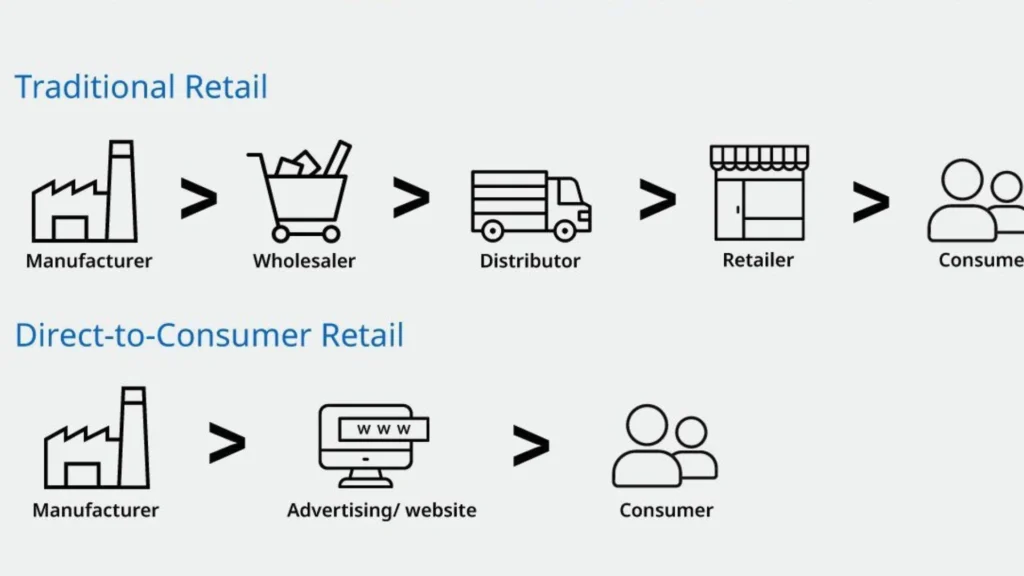
Ecommerce direct to consumer (D2C) means you sell your product right to end customers through your website, online marketplaces, or social media. You control the customer relationship, set the prices, and own the data from each sale.
Wholesale involves selling large quantities to retailers, distributors, or other businesses who then sell to the final customer. Wholesale trades some profit margin and control to gain scale and simplify operations.
Both approaches can succeed. The choice isn’t about which one is “right” overall; it’s about “what you’re aiming for” — profit margin, speed, reach, or brand control.
The numbers that matter
E-commerce is huge and keeps growing: recent industry snapshots show global e-commerce worth trillions of dollars and increasing each year. One industry summary estimated global e-commerce as a multi-trillion dollar market set to grow into 2027 and beyond.
Market research companies report big growth in the D2C sector. A 2024 industry study pegged the global D2C market at hundreds of billions of dollars predicting double-digit compound growth until 2030. This quick rise shows how brands now want to control distribution and customer connections instead of just relying on retail partners.
Wholesale is still huge because it covers the whole retail world — makers, distributors, and multi-channel sellers. The wholesale/retail chain still brings most products to buyers worldwide everyday and mass-market items. Even as D2C grows, wholesale remains a big player for reaching many customers.
When we look at the big picture: online shopping is massive, selling straight to customers is one of the fastest-growing parts of it, but selling in bulk still dominates in reach and volume across many product types.
Key trade-offs: profit, power, size and quickness
Here’s how selling online to customers stacks up against wholesale in areas that count when you’re making big decisions.
1. Profits and price control
- Selling straight to customers: You keep the money that would go to stores and set your own prices. This often means you make a lot more money on each item — but you also have to pay for all the marketing, shipping, and returns yourself.
- Wholesale: You get less profit per item because wholesalers and retailers take a share. The upside is you sell more in bulk and spend less on marketing; retailers handle a big part of finding new customers.
This means: If making good money on each item matters a lot (for fancy, special, or high-profit items), selling straight to customers looks good. If you need to reach lots of people and sell a lot right away, wholesale helps.
2. Power over your brand and how customers see you
- D2C: You have complete power over packaging, messaging, pricing and what happens after purchase. You mold how customers connect with your brand.
- Wholesale: Stores that sell your products decide how to display, promote and often price them. You lose some say in how people see your brand.
3. Customer info and long-term value
- D2C: You have your own first-party data — purchase history, email, behavior signals — and can create retention programs, subscriptions and personalized journeys. First-party data is becoming crucial as third-party tracking gets stricter.
- Wholesale: You have limited direct access to end customers unless retailers share data. This makes it harder to optimize LTV and personalize.
4. Speed to market and distribution scale
- D2C: You can tweak products and sequences ; launches happen when you decide. However, scaling needs investment in marketing and fulfillment.
- Wholesale: Retailers offer quick shelf presence and access to customers. Getting retailers to agree can lead to fast volume, but often needs steady supply and agreed-upon terms.
5. Business complexity and cash flow
- D2C: Needs management of shipping, returns, customer help, and marketing from the start — which adds to business costs but allows for quick changes.
- Wholesale: Often cuts down on daily customer service and handling returns because stores take on these tasks. But it also locks up stock in store terms and involves longer wait times for payment.
When to choose ecommerce direct to consumer vs wholesale: decision guidelines
These are practical tips to help decide which path to focus on.
- If your product depends on brand experience and repeat buys → D2C. Categories like beauty, supplements, specialty food and direct apparel often benefit because stories and subscriptions boost customer lifetime value.
- If you need quick geographic coverage and have slim margins → wholesale. Wholesale helps with everyday goods or when retailers’ logistics power is crucial.
- If money’s tight and profits per item are slim → mix it up. Sell straight to customers where you can grab data and keep more cash, and use stores for wider reach. Many brands find this balance works well.
- If you want quick feedback before going all-in on selling → start with stores then add direct sales. Use what store owners tell you to make your packaging and ads better before spending big on your own sales channels.
Step-by-step guides for each approach
Guide to succeed in selling to customers online
- Put money into gathering your own customer info: Emails, loyalty program IDs, and rewards for repeat buyers. Use this info to tailor offers and cut down on what you spend to get new customers.
- Make retention a top goal: Boost customer value through subscriptions, refill programs, and reminders to replenish.
- Embrace social shopping and influencers: Buyable posts and partnerships with creators cut the time from discovery to purchase. Experts predict social commerce will grow fast and become a key distribution channel for many brands.
- Get your numbers right before ramping up paid ads: Shoot for a healthy ratio between customer value and acquisition cost; if not, spending more on ads will just speed up losses.
- Put effort into amazing unboxing and customer care: These experiences get people talking about your brand for free.
Strategy to grow wholesale business
- Create strong retailer partnerships with clear trade terms: Provide support for promotions, reliable supply, and team up on marketing.
- Train retail staff and give them merchandising materials: Help stores sell your product more — their sales matter most to them.
- Attend trade shows and use regional reps to boost placement: These methods still work well to break into new retail markets.
- Work out data sharing deals: When you can, request sales data or customer insights to guide your marketing and product choices.
- Keep your brand consistent: Give clear brand rules so stores show your product the same way everywhere.
Hybrid strategies: when combining two channels works best
Many current brands use a mixed approach: direct sales for high-end experiences and data collection, plus chosen wholesale partners to reach more people. Here are some examples of mixed tactics:
- Channel segmentation by SKU: Keep flagship or premium SKUs for D2C, sell core SKUs to wholesalers.
- Territorial wholesale: Sell to wholesalers in areas where D2C setup costs too much, keep other areas D2C-first.
- Retail as marketing: Use pop-ups or retailer windows to boost awareness and send customers to your site for subscriptions or products with higher margins. New trends show D2C brands growing offline presence to add to online growth.
Hybrid models allow you to use the best of both worlds: use wholesale for wide distribution and D2C to grab the valuable customer interactions that lead to long-term profits.
Future trends that will change the choice
The scene is shifting fast. These trends have an impact on the math of ecommerce direct to consumer vs wholesale.
1. First-party data turns into a competitive edge
As privacy changes make third-party tracking less dependable, owning agreed-upon customer data will drive targeting and personalization. Brands that build trusted first-party data plans will gain an advantage.
2. Social commerce grows up to include native checkout
Social apps are adding more native checkout features and creator commerce tools. As social platforms become shopping platforms, D2C brands that excel at creator partnerships and in-app shopping will cut down the time from discovery to purchase.
3. Omnichannel experiences are a must
Shoppers want a smooth journey across all channels – finding products online, feeling them in stores buying on their phones, and returning items . Companies need to blend their strategies and link their direct-to-consumer and wholesale channels more to give customers the same experience everywhere.
4. Delivery speed and eco-friendliness will guide choices
Quick shipping and green packaging are now must-haves for many shoppers. Brands have to pick partners and delivery methods that meet these needs without eating into their profits.
5. Data and partnerships are changing wholesale
Retailers are putting money into their own data and services; advanced retail partners now give promotional packages, data insights and omnichannel programs. Wholesale isn’t just about shelf space anymore; it can boost growth when paired with data agreements and joint marketing.
Case examples
- Small beauty brand: Begins direct-to-consumer to create brand and subscription income then teams up with specialty retailers to help people discover products in physical stores. The brand keeps limited edition and top-selling items on its site.
- Commodity food brand: Uses wholesale to reach grocery chains while testing premium direct-to-consumer bundles on its own site to get higher profits and customer data.
- Niche apparel maker: Applies D2C to custom limited drops and community building; uses wholesale for basic staples that need wide availability.
These examples show the practical ways brands mix both channels to boost both reach and lifetime value.
Quick checklist to pick your route
- You want control over brand experience? → study D2C.
- Mass reach right away is key? → think about wholesale.
- You can handle fulfillment and customer service? → D2C is doable.
- You need to save cash and cut down daily ops? → wholesale might be simpler.
- Long-term customer data and retention drive your growth? → D2C is the way to go.
Conclusion
The choice between ecommerce direct to consumer and wholesale isn’t a simple one — it’s a calculated decision about what you want to improve now and how you plan to expand. D2C gives you better control of margins, and the invaluable asset of first-party data. Wholesale offers broader distribution, less operational costs, and quick volume. For most brands, a smart mix — using each channel for its strengths — will result in the strongest growth.
Your best option depends on your product type, profit margins, cash flow, and long-term goals. Begin by looking at your unit economics, try one channel first, and keep your options open. The retail world is changing : brands that can manage customer relationships while working with partners to reach more people will be in the best position to grow in the future.
FAQ
Q1: Which model has more profit potential — D2C or wholesale?
The profit potential hinges on the economics of each unit sold. D2C can yield higher gross margins per sale, but you must cover all marketing, fulfillment and returns expenses. Wholesale provides lower margins but can boost volume and cut customer service costs. To determine which model is more profitable for your product mix, you need to create a profit model at the SKU level.
Q2: Is it possible for a brand to succeed in both D2C and wholesale?
Yes. Many brands use a mixed approach: they sell high-end items and subscription models through D2C while using wholesale to increase reach and volume. Success depends on having a clear strategy for each channel dividing SKUs , and managing conflicts between channels.
Q3: How important is first-party data in this decision?
It’s becoming more crucial. First-party data allows you to customize offers, cut down on paid acquisition costs, and boost LTV. If owning customer relationships is key to your long-term plan, make D2C a top priority.
Q4: Will retail disappear as D2C grows?
No. While D2C is expanding fast, retail and wholesale remain essential for scale, discovery and convenience. The future will be omnichannel, with online brands using retail and retailers adding more services to keep customers.
Also Read:
Influencer Marketing ROI for D2C Brands