Direct-to-Consumer Branding Strategy: How to Build a D2C Brand
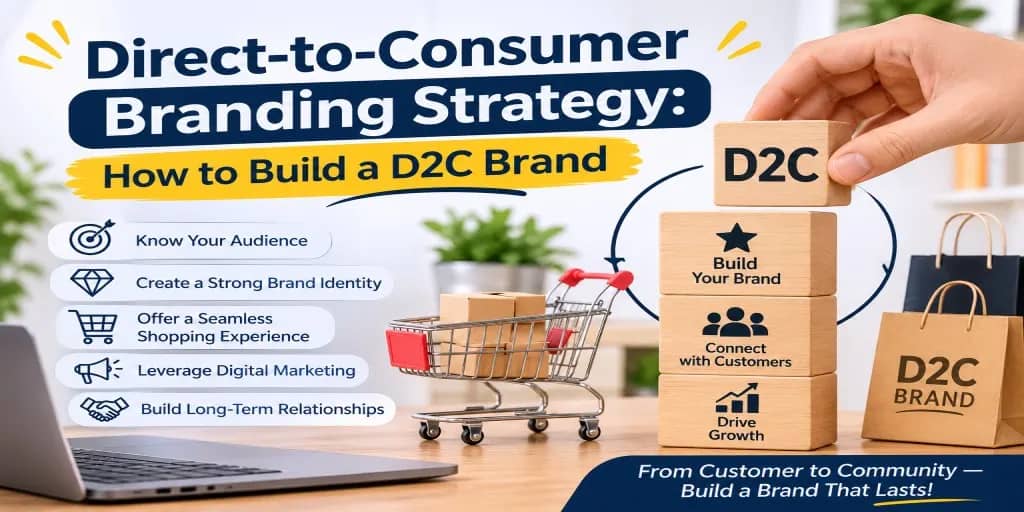
A D2C branding strategy is the plan for why a customer should buy from you directly, remember you, and come back without being paid for with another ad. In India in 2026, that last part decides who survives. Ad costs have risen, discounts are easy to copy, and the brands still growing are the ones customers search for by name. This guide sets out how to build that kind of brand, stage by stage.
What is a D2C branding strategy?
A D2C branding strategy defines who your brand is for, what it promises, how it looks and sounds, and how every touchpoint, from the ad to the unboxing, proves that promise. It differs from a marketing plan. Marketing brings a customer once. Branding is the reason the second order costs you less than the first.
For a direct-to-consumer business, brand does a job that retail shelves used to do. There is no shopkeeper to recommend you and no aisle to be discovered in. The website, the packaging and the product have to carry all the persuasion.
Why branding matters more for Indian D2C brands in 2026
The market is growing and getting harder at the same time. Unicommerce reported that Tier 2 and Tier 3 cities drove 66% of new D2C orders in FY2026, with order volumes up about a third year on year. Mordor Intelligence estimates India’s D2C e-commerce market at $87.5 billion in 2025, rising to roughly $267 billion by 2030, though estimates vary widely because definitions differ.
More buyers, though, has not meant easier profit. Three pressures explain why:
- Trust is expensive. New shoppers outside the metros often choose cash on delivery and refuse the parcel if doubt sets in. A brand people recognise gets more prepaid orders and fewer returns.
- Categories are crowded. Redseer’s Kushal Bhatnagar told the Economic Times in March 2026 that competitive intensity is “pressing brands to position as per the right niches”.
- Paid acquisition alone does not compound. If every order needs an ad, growth stops the day the budget does.
Our position is simple: for an Indian D2C founder, brand is a unit-economics tool before it is a creative exercise. It should lower acquisition cost, raise prepaid share and lift repeat rate. If your branding work does none of those, it is decoration.
How to build a D2C brand: seven steps
1. Pick a narrow customer and a specific problem
“Skincare for women” is a category. “Sunscreen that does not leave a white cast on Indian skin tones” is a position. Write one sentence: who it is for, what problem it solves, and why existing options fall short. If a competitor could put their logo on your sentence, it is not specific enough.
2. Choose one hero product
Most successful D2C brands are known for one product before they are known for a range. A hero product focuses your ad spend, your reviews and your content on a single page that converts. Extend the range after the hero has earned repeat buyers.
3. Build the identity system
Name, logo, colours, typography, photography style and tone of voice. Keep it small and consistent. Test the logo at the size of an Instagram profile picture and a courier label, because that is where it will live. A professional branding and design process produces a short guideline document your team and vendors can follow.
4. Make the product page do the selling
In D2C, the product page is the salesperson. It needs a headline that states the benefit, photos that show scale and use, proof (reviews, test results, certifications), clear delivery and return terms, and answers to the three objections you hear most. Compare your numbers against our benchmark for a good D2C conversion rate in India.
5. Treat packaging as media
The parcel is the only brand touchpoint with a 100% open rate. A clean box, a note that sounds human, and a card that asks for a review or offers a reason to reorder cost little per order. This is also where a first-time COD buyer decides whether you are a real brand.
6. Choose channels by role
Give each channel a job instead of expecting sales from all of them:
- Meta and Instagram: discovery and creative testing.
- Google Search and Shopping: capturing demand you have already created.
- Marketplaces and quick commerce: reach and convenience, at lower margin and with less customer data.
- Your own website: margin, data and the full brand experience.
- WhatsApp and email: repeat orders at almost no media cost.
7. Build retention before you scale ads
Set up post-purchase messages, a reorder reminder timed to how long the product lasts, and a simple reason to return (a subscription, a bundle, early access). Scaling acquisition into a business with no repeat engine only makes the losses larger. A structured retention marketing programme is usually the cheapest growth available to a brand past its first thousand customers.
The D2C brand roadmap by revenue stage
Competing guides list everything a brand could do. Founders need to know what to do now and what to postpone. This is the sequence we recommend.
| Monthly revenue | Brand priority | Invest in | Postpone |
|---|---|---|---|
| ₹0–10 lakh | Prove one product and one promise | Positioning sentence, hero product page, basic identity, reviews, clean packaging | Brand films, large influencer deals, wide product range |
| ₹10–50 lakh | Become recognisable | Consistent creative system, founder or expert content, UGC, WhatsApp and email flows, first range extension | Offline retail, celebrity endorsements |
| ₹50 lakh+ | Become preferred | Brand campaigns, community, marketplaces and quick commerce, selective offline, loyalty programme | Nothing; now the risk is spreading too thin |
A real example of what consistency produces: for Sancha Tea, a premium tea brand we work with, performance campaigns built on a clear brand story have delivered an average 10X return on ad spend on Meta and 7X on Google, with a peak week of 29X, as published in our case study. Those returns come from a brand customers already trust, and good media buying could not have produced them alone.
Three numbers that tell you whether the brand is working
Awareness surveys are for large companies. A growing D2C brand can track brand strength with data it already has.
- Branded search. Monthly searches for your brand name in Google Search Console. Rising branded search means people remember you.
- Prepaid share and RTO rate. Unicommerce’s logistics data showed return-to-origin rates across D2C falling from nearly 39% in the November 2025 festive period to around 21% by February 2026. Track your own figure. When trust in your brand rises, more buyers pay upfront and fewer refuse delivery.
- Repeat purchase rate. The share of customers who order again within a period that fits your product. This is the clearest evidence that the product kept the brand’s promise.
If all three are improving, your branding is doing commercial work. If only your follower count is improving, it is not.
Should a D2C brand sell on marketplaces?
Yes, once the brand has an identity of its own, and with clear rules. Marketplaces and quick-commerce apps put you where customers already shop, which matters in Tier 2 and Tier 3 cities. The cost is margin, limited customer data and price pressure.
Keep the website as the home of the full range, bundles and subscriptions. Use marketplaces for the hero product and fast-moving sizes. Hold prices consistent across channels so you do not train customers to wait for the cheapest listing.
Common D2C branding mistakes
- Launching with twelve products and no hero.
- Copying a category leader’s look, which makes you the cheaper imitation.
- Building the brand on discounts. A customer acquired at 50% off expects 50% off forever.
- Spending on a logo and nothing on the product page or packaging.
- Ignoring post-purchase communication, where most repeat orders are won.
- Measuring brand by followers and likes.
Build the brand that lowers your costs
A D2C branding strategy earns its keep when customers search for you by name, pay before delivery and order again. Start narrow, perfect one product, and add brand investment in the order the roadmap suggests. If you want an outside view on where your brand stands, the Modifyed Digital team works with consumer brands across e-commerce and D2C and can walk through it with you.
Frequently asked questions
Start with a narrow customer and one hero product, create a simple identity, build a product page that answers objections, deliver a good unboxing experience, and set up repeat-purchase messaging before scaling ads.
Enough for a clear position, a clean identity, good product photography and decent packaging. At launch, those matter far more than campaigns. Increase brand spend as revenue and repeat rate grow.
Marketing is the activity that brings a customer to you. Branding is the reason they choose you, pay upfront and return. Strong branding makes every marketing rupee work harder.
Expect 12 to 24 months of consistent work before a brand is widely recognised in its niche. Early signals, such as rising branded search and repeat orders, should appear within the first six months.
It can be, for brands with healthy gross margins, controlled returns and real repeat demand. The 2026 market rewards discipline more than speed.