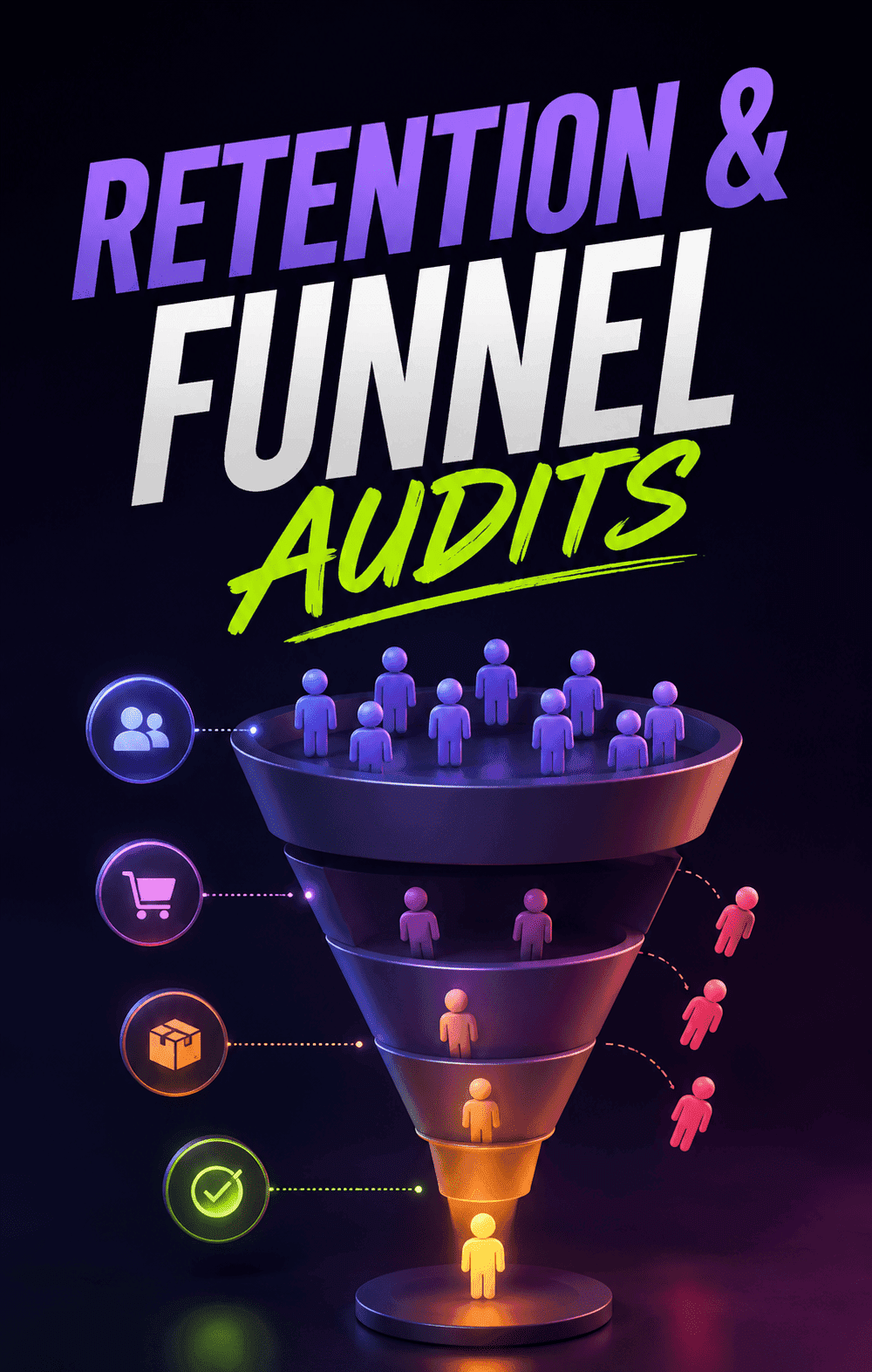
Retention & Funnel Audits
Full diagnosis of where customers are actually dropping off - checkout, post-purchase, or lifecycle messaging - before any tactic gets recommended.
Fix the leak before you pour in more acquisition spend.
Most retention marketing services start with a loyalty programme and a discount calendar, without ever diagnosing why customers are actually leaving. Modifyed Digital retention marketing services start with an audit - for one D2C client, that meant uncovering 30 fragmented ad sets, an 81% checkout abandonment rate, and a 0.52 ROAS behind the acquisition numbers, before building a funded 90-day recovery plan targeting a blended 2.39× ROAS. Retention isn't a discount code bolted onto your existing funnel - it's fixing what's actually causing the churn.
Digital Growth
Proven Track Record
Lead Metric
2.39×
Target Blended ROAS in a Funded 90-Day Recovery Plan, From a 0.52 Starting Point
81%
Checkout Abandonment Diagnosed as the Real Retention Problem on One Account
10+
Years Managing Full-Funnel D2C Performance
One Team
Retention Diagnosis, Media, and CRO Under One Roof
D2C brands across fashion, F&B, and lifestyle categories have trusted us to look past acquisition metrics and find what's actually costing them repeat customers.
















Why Most Retention Tactics Don't Fix Retention

Here's the pattern behind most failed retention efforts: a brand launches a points programme or a win-back email series without ever diagnosing why customers stopped buying in the first place. We audited one account and found the real retention leak wasn't customer sentiment - it was a checkout abandoning 81% of purchase intent before the sale even completed, sitting behind an ad account already struggling at a 0.52 ROAS across 30 fragmented, uncoordinated ad sets.
Our retention marketing services start with full-funnel diagnosis, not a loyalty tactic. Before recommending an email flow or a rewards programme, we check whether customers are actually able to complete a purchase, whether the post-purchase experience gives them a reason to return, and whether acquisition spend is even bringing in customers with retention potential in the first place. For that same client, the fix wasn't a discount - it was a funded, sequenced 90-day plan targeting a blended 2.39× ROAS by rebuilding the funnel from checkout backward.
Full diagnosis of where customers are actually dropping off - checkout, post-purchase, or lifecycle messaging - before any tactic gets recommended.

Messaging and offers mapped to where a customer actually is in their relationship with your brand, not a generic blast to your full list.

Segmented customer data used to personalise retention messaging, rather than treating every customer the same.

Identifying churn signals early and building intervention campaigns before a customer is fully gone.

Post-purchase flows, replenishment messaging, and win-back campaigns built specifically for D2C purchase cycles.

Loyalty and rewards programmes designed after the underlying retention problem is diagnosed, not as the first move.

Campaigns designed to increase purchase frequency and average customer lifetime value, not just single-transaction ROAS.

Ongoing engagement strategy connected to your broader Meta Ads and social presence, so retention isn't siloed from acquisition.
Full diagnosis of where customers are actually dropping off - checkout, post-purchase, or lifecycle messaging - before any tactic gets recommended.
Messaging and offers mapped to where a customer actually is in their relationship with your brand, not a generic blast to your full list.
Segmented customer data used to personalise retention messaging, rather than treating every customer the same.
Identifying churn signals early and building intervention campaigns before a customer is fully gone.
Post-purchase flows, replenishment messaging, and win-back campaigns built specifically for D2C purchase cycles.
Loyalty and rewards programmes designed after the underlying retention problem is diagnosed, not as the first move.
Campaigns designed to increase purchase frequency and average customer lifetime value, not just single-transaction ROAS.
Ongoing engagement strategy connected to your broader Meta Ads and social presence, so retention isn't siloed from acquisition.
For a Himalayan D2C food brand at risk of losing its retention economics entirely, we ran a full audit that uncovered 30 fragmented ad sets, an 81% checkout abandonment rate, and a 0.52 ROAS - findings that reframed the entire engagement from "add more retention tactics" to "fix the funnel first." The resulting plan is a funded, sequenced 90-day recovery targeting a blended 2.39× ROAS, built by fixing checkout and account structure before layering in lifecycle and loyalty messaging. That audit-first discipline is the same one behind sustained multi-year ROAS on accounts like Sancha Tea, where retention has been managed as a continuous funnel metric, not a seasonal campaign.
View More Client Success Stories
We find the actual leak - checkout, lifecycle messaging, product experience - before recommending a single retention campaign.
We check whether your acquisition spend is even bringing in customers with retention potential in the first place.
Retention problems often start before the "thank you" page - we audit the full purchase path, not just post-purchase.
CRM messaging built around real customer segments and lifecycle stage, not one email to your entire list.
When an account needs a turnaround, we build a phased, budgeted plan with clear milestones - not a vague promise to "improve retention."
Because our retention, media, and UX teams work together, fixes span the full customer journey, not just the loyalty programme.
We'll review your funnel the way we reviewed a client sitting at a 0.52 ROAS - checkout completion, post-purchase experience, and lifecycle messaging. You'll get a straight, prioritised recovery plan - whether you hire us or not.
Get a Free Retention Audit
Why Modifyed
Modifyed Digital's Retention Marketing Services are built around a full-funnel D2C performance approach - because retention rarely exists in isolation. The same discipline has sustained 4–5X ROAS for three consecutive years on one account and helped rebuild a 0.52 ROAS, 81%-checkout-abandonment account into a funded 90-day recovery plan targeting a blended 2.39× ROAS. We look at acquisition, checkout, post-purchase experience, and lifecycle messaging together to understand where customers are being lost and what needs to change before simply adding more retention campaigns.
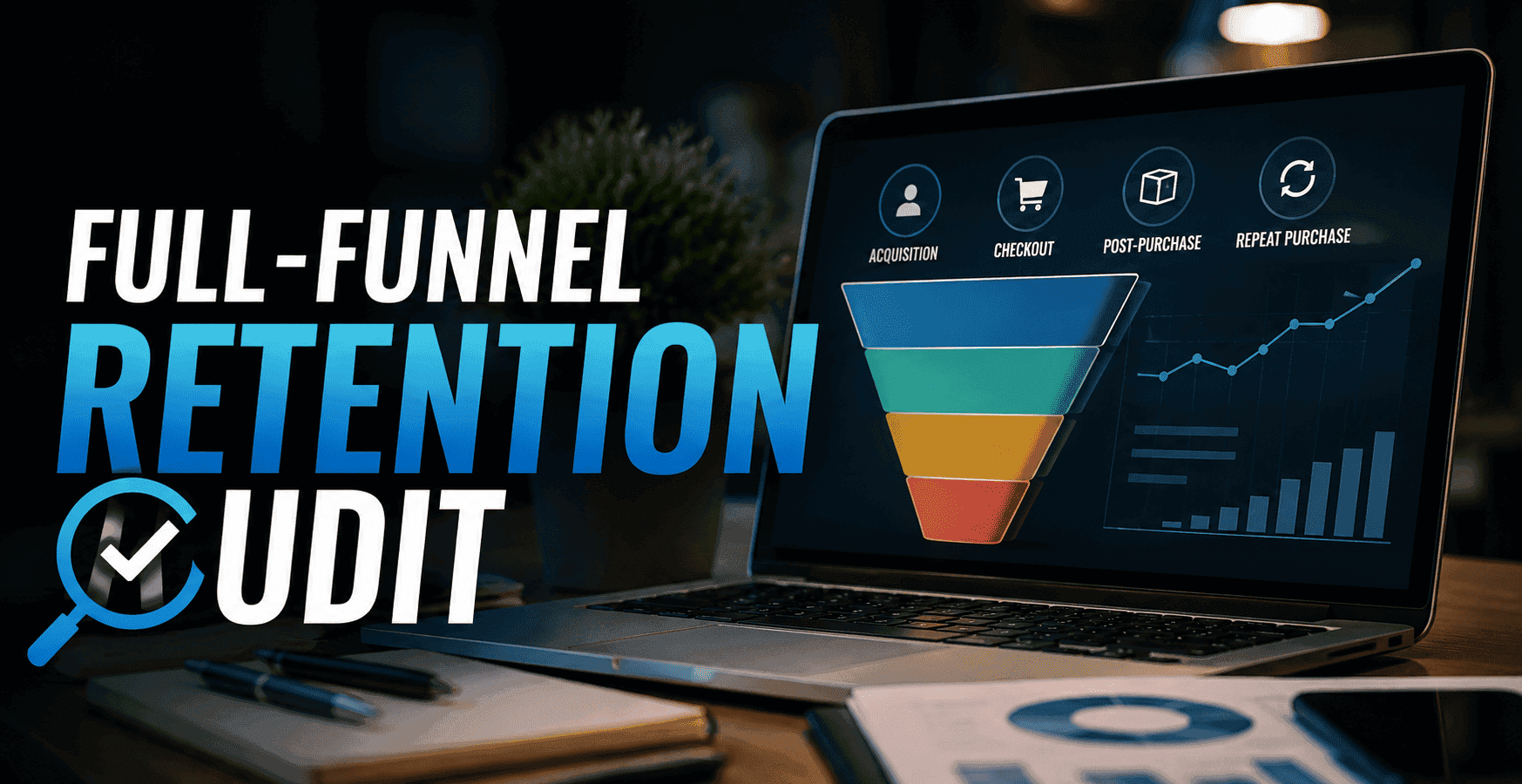
We start by reviewing the complete customer journey - from acquisition and checkout through post-purchase engagement and repeat purchase behaviour. This helps us identify whether the retention challenge is actually coming from weak customer acquisition, checkout friction, poor onboarding, or gaps in lifecycle communication.

We identify the specific reasons customers aren't progressing or returning. That could mean fragmented ad targeting bringing in low-intent customers, a broken checkout step, weak post-purchase communication, or missed opportunities to re-engage existing customers. The goal is to solve the underlying problem rather than apply a generic retention marketing strategy.
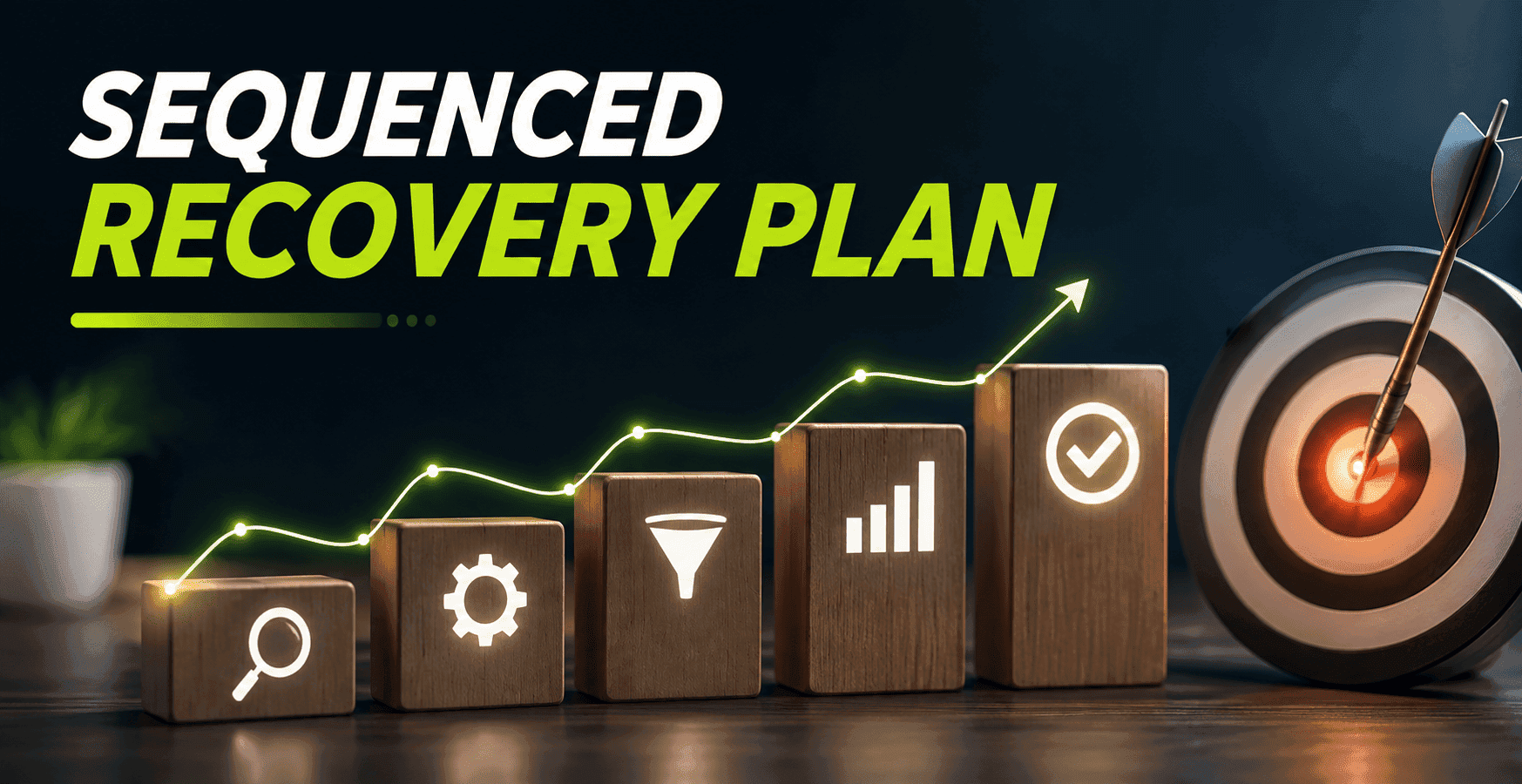
When an account has significant retention or funnel issues, we build a phased recovery plan with clear priorities, milestones, and expected outcomes. Structural problems are addressed first so that additional retention marketing spend is working with a healthier funnel instead of compensating for one that is still leaking.
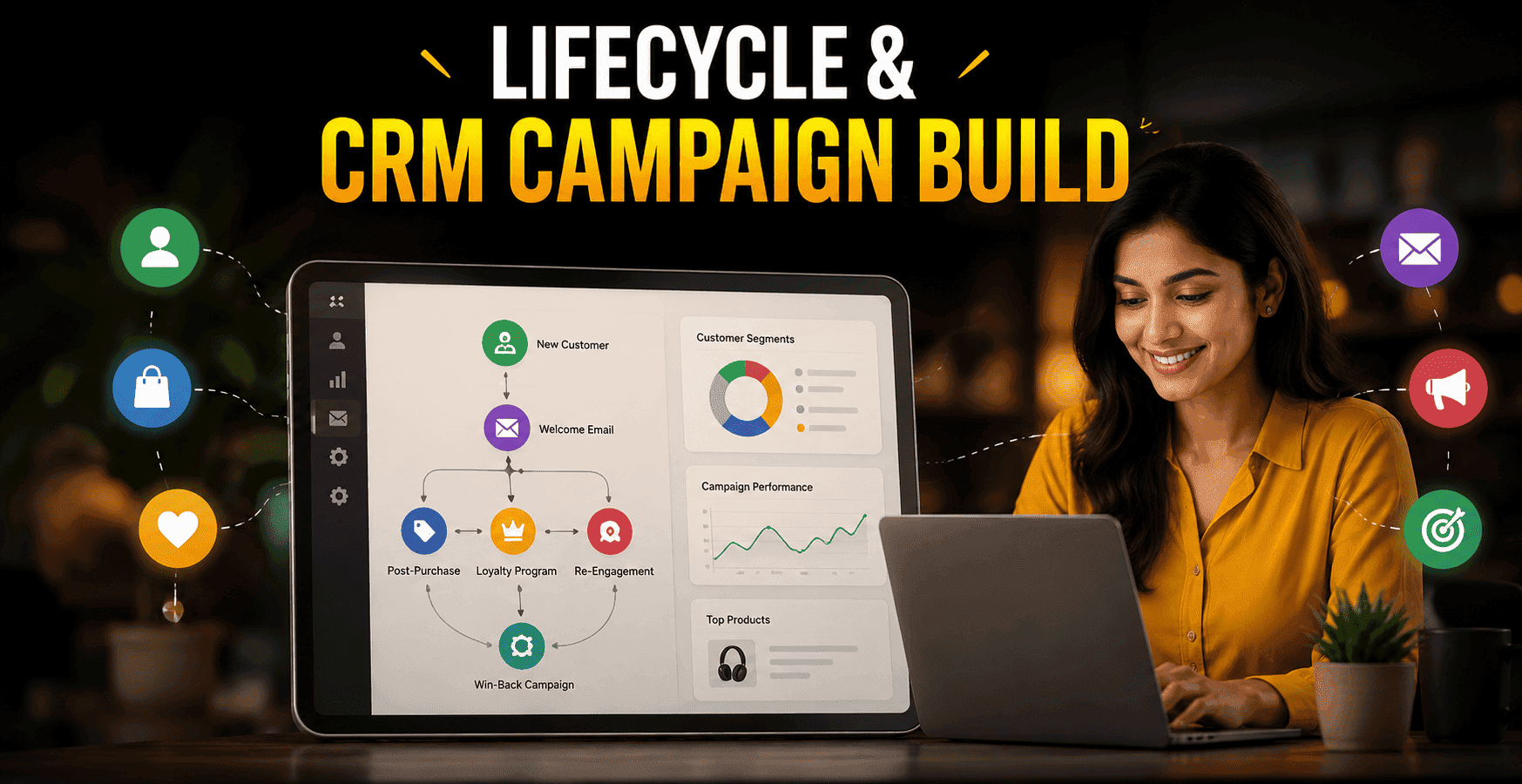
Once the foundation is in place, we build lifecycle campaigns around actual customer behaviour. Segmented messaging, post-purchase flows, loyalty initiatives, re-engagement campaigns, and win-back campaigns are designed around where customers are in their journey and what action we want them to take next.

We monitor retention alongside acquisition performance so the two sides of the funnel are evaluated together. Repeat purchase rate, customer lifetime value, churn signals, retention revenue, and lifecycle campaign performance are reviewed alongside ROAS and acquisition efficiency. As the data changes, we rebalance campaigns and priorities to keep the retention strategy aligned with overall business growth.
A full-funnel retention audit, lifecycle and CRM marketing, churn reduction campaigns, loyalty programme design, and - where needed - a funded recovery plan for accounts with structural funnel problems.
No - email and CRM are part of it, but retention starts further upstream, often at checkout completion and post-purchase experience, which is where we always start our audits.
We'll tell you. Retention and acquisition are connected - low-intent traffic from a poorly targeted campaign will always show up as a retention problem downstream, and we diagnose the full picture before recommending fixes.
Yes - that's a common starting point. We've rebuilt an account from a documented 0.52 ROAS crisis with 81% checkout abandonment into a funded, sequenced 90-day recovery plan.
No - and we're cautious of anyone who promises a number before auditing your funnel. We'll set a realistic, evidence-based target, the way we did with a 2.39× blended ROAS goal built from a genuine 90-day plan.
Repeat purchase rate, customer lifetime value, churn rate, and cohort-level ROAS - tracked alongside acquisition metrics, not in isolation.
Yes, but only after diagnosing the underlying retention problem - a loyalty programme layered on top of a broken checkout won't fix the actual leak.
Structural fixes (checkout, targeting) can show impact within weeks; lifecycle and loyalty programme effects on repeat purchase rate typically take 60–90 days to read clearly.
Work with a retention marketing agency that diagnoses the full funnel before recommending a tactic - and has turned a 0.52 ROAS crisis into a funded recovery plan to prove it.