What Is Local SEO? How It Works, Benefits, and Step-by-Step Guide
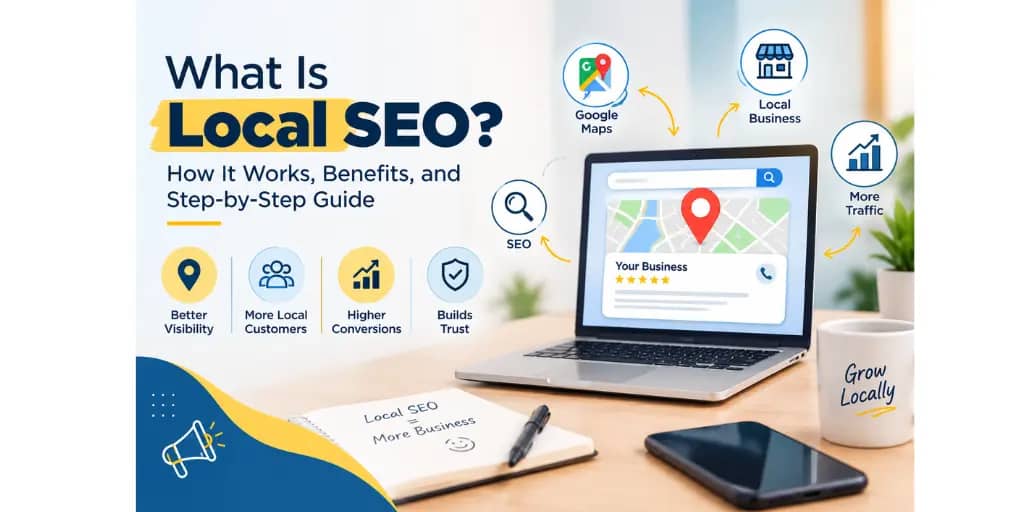
Local SEO (local search engine optimization) is the work of helping your business show up when nearby people search for what you offer on Google Search and Google Maps. When someone in Delhi types “dentist near me” or “best café in Connaught Place,” Google shows a few nearby businesses with their ratings, hours and directions. Local SEO is how you get into that list.
It matters most for restaurants, clinics, salons, shops and service providers who serve a defined area. And it’s more than adding a city name to your website. It means a well-kept Google Business Profile, accurate details everywhere, genuine reviews and a website that makes it easy to get in touch. Here’s how it works and how we approach it at Modifyed Digital.
What Is Local SEO? Meaning in Simple Words
General SEO can target a whole country or the world. Local SEO zeroes in on customers in your area. If you run a salon in Noida, you’d want to show up for searches like “hair salon in Noida,” “bridal makeup in Sector 18” or “haircut near me.”
For a dental clinic in South Delhi, that might mean claiming a Google Business Profile, adding accurate hours, writing clear service pages and collecting genuine patient reviews.
How Does Local SEO Work?
When a search has local intent, Google shows nearby businesses through Maps, the Local Pack and regular results. The searcher often doesn’t even need to type “near me.” Search “Italian restaurant” and Google uses your location anyway. According to Google, three factors mainly decide who appears.
1. Relevance
This is how closely your business matches the search. Accurate categories, clear service descriptions and complete business information help Google understand what you do. Stuffing in unrelated keywords doesn’t.
2. Distance
This is how far you are from the searcher or the place in their query. SEO can’t change it, but you can make sure Google has your correct address or service area. Fake addresses and ineligible virtual offices break Google’s guidelines.
3. Prominence
This is how well known and trusted your business is. Google looks at reviews, links and mentions from across the web. Genuine reviews, accurate listings and relevant local links all help. Google doesn’t publish an exact formula, though, and even a strong profile won’t put you first every time.
Where Do Local Search Results Appear?
- The Local Pack: the group of businesses shown with a map near the top of Google Search, with ratings, hours and directions.
- Google Maps: where people compare nearby options, read reviews and get directions.
- Local organic results: regular website listings for searches like “interior designers in Gurgaon.” You can rank here even without a Local Pack spot, so your website and your profile both matter.
Why Is Local SEO Important?
Local searches usually come from people with a real, often immediate need. Someone searching “emergency plumber in Noida” wants to call someone soon, and your listing puts your number, directions and website right in front of them. It also levels the playing field: an independent café doesn’t need national fame to be the best match for someone looking for coffee nearby. Just remember it’s not a one-time job, since competitors and reviews keep changing.
Local SEO vs Traditional SEO
| Factor | Local SEO | Traditional SEO |
| Audience | Customers in a specific area | Local, national or global |
| Where you appear | Maps, Local Pack, organic results | Mainly organic results |
| Key work | Business Profile, reviews, citations, local pages | Content, technical SEO, links |
| Example keyword | Dentist in Delhi | How to maintain healthy teeth |
Most businesses need both. A dental clinic can use local SEO to show up for “dentist in South Delhi” and broader SEO to rank helpful articles about dental care.
Who Needs Local SEO?
Any business with a genuine physical location or a defined service area: restaurants and cafés, healthcare clinics, salons, plumbers and electricians, retail stores, law and accounting firms, coaching centres and agencies. Businesses with several real branches usually need a separate profile and location page for each. Purely online businesses with no in-person customer contact generally shouldn’t create a Google Business Profile just to chase local visibility.
How to Do Local SEO: Step-by-Step
Step 1: Audit Your Current Local Visibility
Search for your business name, your main service plus your city, and your service plus “near me.” Do you show up in Maps, the Local Pack and regular results? Then check the details for wrong hours, old phone numbers, duplicate listings, missing services or broken links. Fix whatever is most likely to confuse customers first.
Step 2: Create and Optimize Your Google Business Profile
Google Business Profile (formerly Google My Business) is free and controls how you appear on Search and Maps. Claim your existing profile or create one, use your real business name, pick the most accurate primary category, add your location or service area, phone number and website, and complete verification. Then keep your hours accurate, add real photos, describe your services clearly and reply to reviews.
Don’t add keywords to your business name unless they’re genuinely part of it, as that breaks Google’s rules. Service-area businesses, like a plumber working from home, should hide their home address on the public profile.
Step 3: Do Local Keyword Research
List your services and the real places you serve, then see how people search for them using Google’s search suggestions, Keyword Planner, Search Console, Ahrefs or Semrush. Watch the intent: “what is interior design?” is someone learning, while “interior designer in South Delhi” is someone hiring. Use local keywords naturally in titles, headings and service pages, never city names on repeat.
Step 4: Optimize Your Website for Local Searches
Your website should make it obvious what you do and where. A title like “Plumbing Services in Noida | ABC Plumbing” tells people the service, the place and the brand in one line. Build service pages around what customers want to know: services, areas served, how to book and common questions. Keep your name, location, phone number and hours easy to find. Good on-page SEO does a lot of the heavy lifting here.
Step 5: Create Useful Location Pages
If you have genuine branches in, say, Delhi, Noida and Gurgaon, give each one its own page with its address, hours, services, photos and directions. What doesn’t work is copying the same page thirty times and swapping in a new neighbourhood name. And if you’re a service-area business, never imply you have an office where you don’t.
Step 6: Keep Your Local Citations Accurate
A citation is any online mention of your business name, address and phone number (NAP), on directories, industry sites or map platforms. If you’ve moved but an old listing still shows your previous address, customers get confused. Check your website, Business Profile and the main directories in your industry, and fix anything outdated. Skip the hundreds of low-quality directories some services push.
Step 7: Encourage Genuine Customer Reviews
Google confirms that reviews and positive ratings can help local rankings, and customers read them before deciding. Ask for honest feedback after a service, share your Google review link and make it easy. Don’t buy reviews, offer rewards for them or only ask happy customers. When a negative review comes in, stay polite and factual, and offer to continue the conversation privately. A calm reply often builds more trust than a page of five-star ratings. If reviews are a bigger concern, online reputation management can help.
Step 8: Earn Relevant Local Backlinks
Links from regional publications, local business associations, industry bodies or community events you genuinely support can bring in local customers and strengthen your visibility. Earn them by being useful, for example by sharing expert insight with a local publication. Don’t pay for links meant to game rankings. Our off-page SEO work follows the same relevance-first approach.
Step 9: Improve Mobile Usability and Speed
Most local searches happen on phones, often on the move. Keep text readable, buttons easy to tap, pages quick to load and your phone number one tap away. Speed alone won’t win local rankings, but a clunky site will lose you calls.
Step 10: Add LocalBusiness Structured Data
Structured data is code that tells search engines specific facts such as your business type, address, phone number and opening hours. It must match what’s on the page, and it won’t replace a Business Profile or guarantee a Local Pack spot. It simply helps search engines read your details correctly. Test it with Google’s Rich Results Test.
Step 11: Track Your Local SEO Performance
| Metric | What it tells you |
| Profile interactions | How people engage with your Business Profile |
| Calls | Phone enquiries from your listing or site |
| Direction requests | Interest in visiting your location |
| Website clicks | Visits from your profile and local searches |
| Enquiries or bookings | The actions that actually matter |
Use Google Business Profile Performance, Search Console and Google Analytics 4. Remember that local rankings shift depending on where the searcher is, so checking a keyword once from your own office won’t show you what customers across your area see.
How Is AI Search Changing Local SEO?
Features like AI Overviews and Google AI Mode can now answer questions about nearby services and compare options. There’s no guaranteed way to get an AI tool to recommend your business, so be wary of anyone selling a special package for it. What works is the same as always: accurate details, genuine reviews, clear service descriptions and consistent listings.
How Long Does Local SEO Take?
Simple profile updates can show up fairly quickly once Google processes them. Climbing the rankings in a competitive area usually takes several months or more. Focus less on positions and more on whether local customers are calling and visiting more often. Our post on how long SEO takes in India breaks this down by industry.
How Much Does Local SEO Cost?
Google Business Profile is free, and you can handle the basics yourself. Professional local SEO costs more or less depending on how many locations you have and how competitive your market is. A neighbourhood café and a 30-branch retail chain have very different needs.
Common Local SEO Mistakes to Avoid
- Outdated business information: wrong hours or phone numbers lose customers straight away.
- Irrelevant categories: pick categories that genuinely describe what you do.
- Ignoring reviews: unanswered feedback, good or bad, suggests nobody’s listening.
- Fake locations or fake reviews: both break Google’s rules and can damage your reputation.
- Duplicate location pages: swapping city names adds no real value.
- Measuring only rankings: track calls, bookings and visits, not just positions.
Local SEO Checklist
- Claim and verify your Google Business Profile
- Choose accurate categories, hours and service areas
- Add real photos and a clear list of services
- Research local keywords for each service and area
- Optimize your service and location pages
- Fix outdated NAP details across key directories
- Ask for genuine reviews and reply to them
- Track calls, direction requests and bookings every month
Frequently Asked Questions
Yes. An eligible business can appear on Google Maps through its Business Profile alone. A good website still helps you show up in regular search results and gives customers more to go on before they get in touch.
Keep your Business Profile complete and accurate, make your services clear, collect genuine reviews and build a trustworthy presence across the web. Distance plays a part too, and that’s outside your control.
Yes. Most small businesses can manage their profile, reviews, website content and listings on their own. Specialist help makes more sense for multiple locations, technical issues or very competitive markets.
Yes. If you serve a local area, it’s often the most cost-effective way to win customers, because you’re competing with nearby businesses rather than national brands. A complete Google Business Profile and a steady flow of genuine reviews alone can make a noticeable difference.